
How to Choose Windscreen Wipers? Flat, Conventional or Hybrid Blades?

Rain, slush and the lights of other vehicles reflecting off a wet windscreen can make driving considerably more difficult, especially after dark. If the wiper blades also leave streaks or fail to clear water evenly, visibility deteriorates even further. So, how to choose windscreen wipers that effectively clear the glass?
When purchasing new wiper blades, the key factors to consider are blade length, mounting type and compatibility with the vehicle. Choosing the correct length alone is not always enough. What are the differences between flat, conventional and hybrid wiper blades, when should they be replaced and how can drivers maintain them?
How to Choose the Right Windscreen Wipers for Your Car
The best way to select windscreen wipers is to check their compatibility using an automotive parts catalogue. The vehicle make, model and year of manufacture are essential. In addition, the model generation, body style or production date may also be relevant.
When purchasing new wiper blades, consider the following factors:
- Blade length – the driver’s and passenger’s side wiper blades often differ in length. Blades that are too short will clear a smaller area of the windscreen, while excessively long blades may interfere with each other or extend beyond the edge of the glass.
- Mounting type – the connector or adapter must fit the wiper arm. Even a blade of the correct length may be unsuitable if it has an incompatible mounting system.
- Blade design – the wiper blade should match the curvature of the windscreen and work with the wiper arm to ensure adequate pressure against the glass.
- Fitting position – vehicles equipped with a rear wiper require a separate compatibility check. Rear wiper blades may differ from front blades in both design and mounting type.
Measuring the existing wiper blades can be helpful, but it should not replace checking the manufacturer’s catalogue. The previously fitted blades may not have been correctly selected.
Types of Windscreen Wipers – What Are the Differences?
There are three main types of windscreen wipers: conventional, flat and hybrid. They differ primarily in their design, pressure distribution across the windscreen and aerodynamic profile.
Conventional Wiper Blades – A Traditional Design
Conventional wiper blades, also known as framed wiper blades, feature a distinctive frame with articulated joints. This structure distributes the pressure applied by the wiper arm across several points along the blade, allowing the rubber wiping edge to maintain contact with the glass.
This type of wiper blade remains common in many vehicles, particularly older models. Its advantages include a proven design and an affordable price.
However, exposed components can accumulate snow, ice and dirt, potentially restricting the movement of the articulated joints.
Flat Wiper Blades – Low Profile and Aerodynamics
Flat wiper blades, also known as frameless or beam wiper blades, do not have a traditional articulated frame. Flexible structural elements distribute pressure along the blade, helping it conform to the curvature of the windscreen.
The low aerodynamic profile and integrated spoiler found in many models help maintain blade contact with the glass while driving. Furthermore, the absence of exposed joints reduces the number of areas where snow and dirt can accumulate.
Modern vehicle manufacturers frequently choose flat wiper blades.
Hybrid Wiper Blades – Combining Two Designs
Hybrid wiper blades combine the multi-point pressure distribution mechanism of conventional wipers with a streamlined outer cover.
The housing limits direct exposure of the mechanism to snow and dirt while giving the blade an aerodynamic profile.
As a result, this design combines the characteristics of a traditional frame with the benefits of an enclosed structure.
Flat, Conventional or Hybrid Wiper Blades – Which Should You Choose?
Understanding how to choose windscreen wipers starts with recognising that no single blade design is the best solution for every vehicle. The choice should primarily depend on catalogue compatibility, wiper arm design and windscreen curvature.
The table below highlights the main differences between the three types of wiper blades.
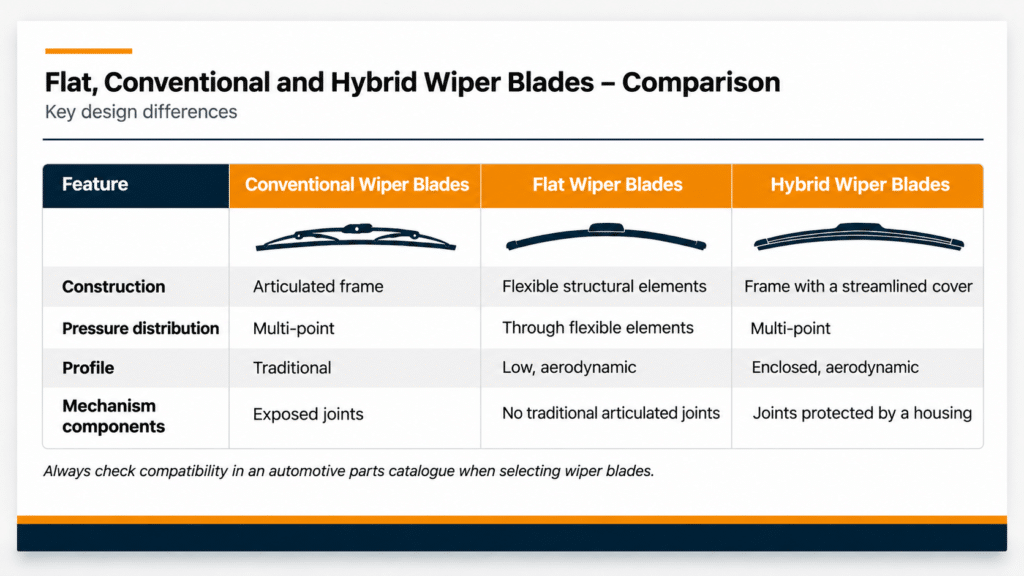
Regardless of the blade design, wiping performance also depends on manufacturing quality, windscreen condition and the pressure applied by the wiper arm.
Vehicle-specific wiper blade sets offer a convenient alternative to selecting individual blades. These sets match the required blade lengths and mounting systems of specific vehicle models.
When Should You Replace Windscreen Wipers?
Replace windscreen wipers when they no longer clear the glass evenly or when the rubber wiping edges show signs of damage. Regular inspections throughout the year are particularly important before and after the autumn and winter seasons.
UV radiation, temperature fluctuations, road salt and other contaminants accelerate the deterioration of wiper blade rubber. Over time, the rubber loses its flexibility, reducing its ability to maintain contact with the windscreen.
Common signs of worn wiper blades include:
- streaks and uncleared areas on the windscreen,
- a thin layer of moisture remaining after each wipe,
- squeaking during operation,
- juddering or skipping across the glass,
- cracks, tears or deformation of the rubber wiping edge.
However, not every symptom necessarily indicates that the blades need replacing. Dirt on the windscreen or rubber wiping edges can also affect wiping performance.
Start by thoroughly cleaning the windscreen and gently wiping the rubber edges. Then, with the windscreen wet, check whether the blades move smoothly and remove water evenly.
If cleaning does not resolve the problem or the rubber shows signs of damage, replace the blades. It is also worth checking the condition of the wiper arms, as insufficient pressure can result in uneven wiping.
How Often Should You Replace Windscreen Wipers?
Inspect windscreen wipers regularly and assess their condition thoroughly at least once a year. Depending on driving frequency and weather conditions, replacement may be necessary considerably sooner.
Even in vehicles that drivers use infrequently, rubber gradually deteriorates due to environmental exposure. Therefore, the actual condition of the blades and their wiping performance should determine when replacement is necessary, rather than their age alone.
How to Maintain Windscreen Wipers and Extend Their Service Life
Driving conditions and maintenance habits influence how quickly wiper blade rubber wears out. Following a few simple recommendations can help prevent premature damage.
Clean the windscreen and wiper blades regularly. Dust, insect residue and road deposits can reduce wiping performance and cause streaks. Use a soft, damp cloth to gently clean the rubber wiping edges.
Avoid operating wipers on a dry or dirty windscreen. Sand and other particles can accelerate rubber wear. Apply windscreen washer fluid before operating the wipers and remove excessive dirt beforehand.
Check for frozen wiper blades. During winter, make sure the blades have not frozen to the windscreen. If they have, defrost the glass and carefully release the blades before activating the wipers.
Remove ice and accumulated snow before using the wipers. Using wiper blades to clear ice or heavy snow can damage both the rubber edges and the wiper mechanism. Use suitable winter accessories to clear the windscreen before driving.
Frequently Asked Questions About Windscreen Wipers
Can conventional wiper blades be replaced with flat blades?
Yes, provided that the flat wiper blades are compatible with the vehicle, have the correct length and mounting type, and match the curvature of the windscreen.
Why do new wiper blades leave streaks?
Possible causes include a dirty windscreen, incorrect installation, unsuitable blade selection or insufficient wiper arm pressure. Start by checking the cleanliness of the glass and ensuring that the blades are correctly fitted.
How to choose windscreen wipers if you do not know the blade length?
Use an automotive parts catalogue and enter the vehicle make, model, year of manufacture and version. This will help identify the required blade lengths and mounting types without the need to measure the existing blades.
DENCKERMANN Windscreen Wipers – Designed for Clear Visibility
Properly selected and well-maintained windscreen wipers contribute to driving safety and comfort throughout the year. Regular inspections help identify signs of wear before they lead to reduced visibility in wet weather.
The DENCKERMANN product range includes flat, conventional, hybrid, vehicle-specific and rear wiper blades. A variety of blade lengths, designs and mounting systems allows drivers to select suitable products for a wide range of vehicles.
At DENCKERMANN, we focus on combining quality, accurate fitment and competitive pricing.
Not sure how to choose windscreen wipers? Use the DENCKERMANN parts catalogue to find the right wiper blades for your vehicle.